


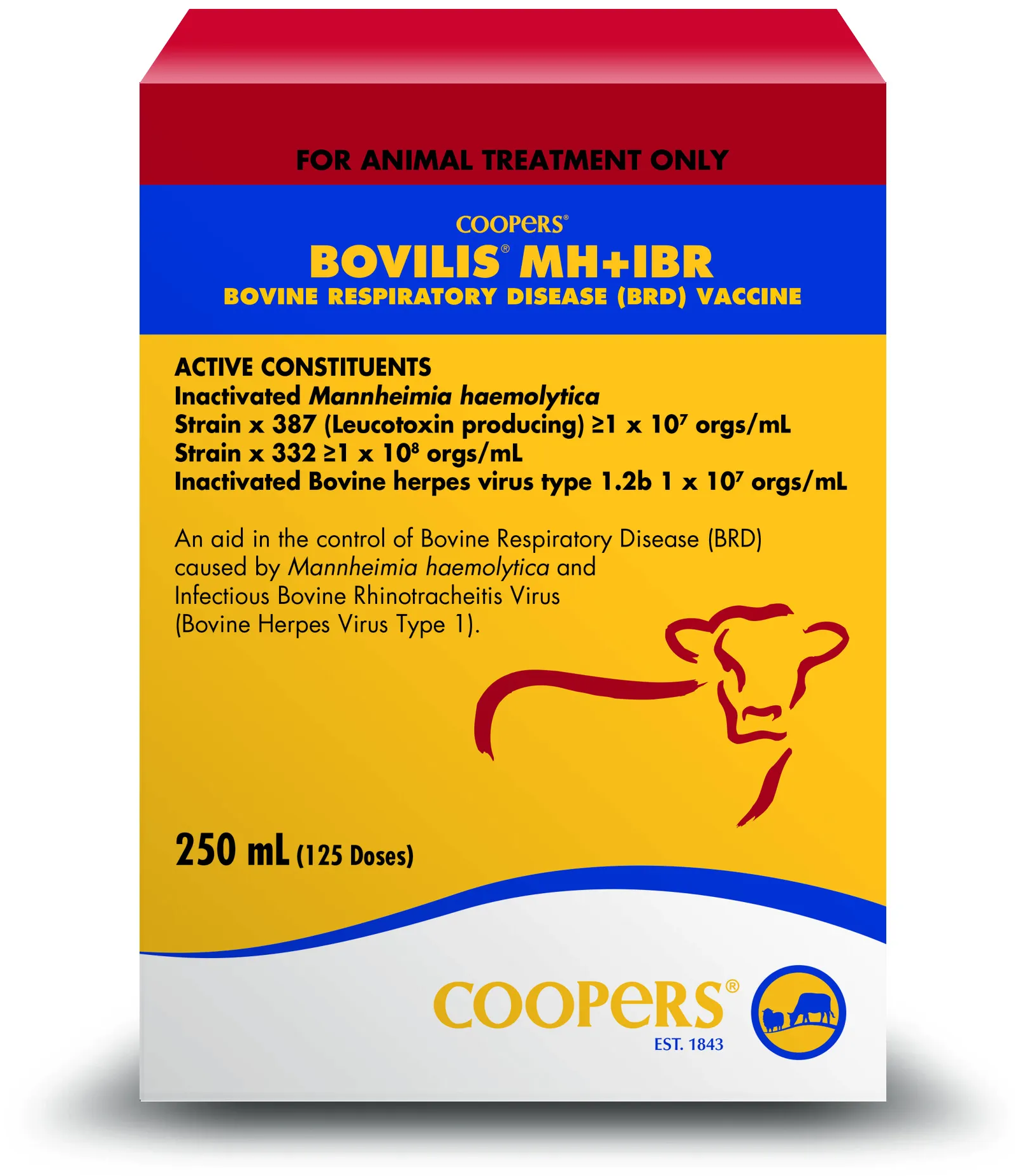
Bovilis MH + IBR
An aid in the control of Bovine Respiratory Disease (BRD) caused by Mannheimia haemolytica and Infectious Bovine Rhinotracheitis Virus (Bovine Herpes Virus Type 1).
Bovine Respiratory Disease (BRD) is a complex disorder of cattle causing mild to severe respiratory disease and even death. It is caused by a combination of infectious agents and stress factors acting on susceptible cattle in paddock, feedlot and dairy systems. Of the several viruses and bacteria known to contribute to the development of BRD Mannheimia haemolytica and Infectious Bovine Rhinotracheitis (IBR) virus are considered two of the most important.
Bovilis MH+IBR Colostral Immunity Claim
Bovilis MH+IBR can now help calves fight pneumonia and BRD from day 1.
Calves fed colostrum from cows vaccinated with Bovilis MH+IBR in late gestation acquire passive immunity against Bovine Respiratory Disease (BRD) caused by Mannheimia haemolytica (MH) and Bovine Herpesvirus Type 1 (IBR).
Frequently Asked Questions
Bovine Respiratory Disease (BRD) is a common cause of illness and death in cattle triggered by the interaction of stress factors, viral and bacterial infections and susceptible cattle. BRD results is inflammation, infection and damage to the lower respiratory tract. BRD can result is significant morbidity (illness) and mortality (death).
BRD is an important disease because it impacts animal welfare and productivity.
BRD typically occurs after a stress event (i.e., feedlot induction, transportation, weaning, changes in feed or water intake etc.) and when common respiratory viruses are circulating through the herd such as Infectious Bovine Rhinotracheitis (IBR).
Bovilis MH+IBR is a vaccine that acts as an aid in the control of Bovine Respiratory Disease (BRD) caused by Mannheimia haemolytica and Infectious Bovine Rhinotracheitis (IBR) virus (Bovine Herpes Virus Type 1). These are considered two of the most important infectious agents contributing to BRD, a complex disorder that can cause mild to severe respiratory disease (pneumonia, pleurisy) and even death in cattle.
It aids in the control of Bovine Respiratory Disease (BRD) associated with Mannheimia haemolytica infection and Infectious Bovine Rhinotracheitis (caused by Bovine Herpes Virus Type 1).
- Inactivated Mannheimia haemolytica Strain x 387 (leucotoxin producing) — ≥1 x 10⁷ orgs/mL
- Inactivated Mannheimia haemolytica Strain x 332 — ≥1 x 10⁸ orgs/mL
- Inactivated Bovine Herpes Virus Type 1.2b — 1 x 10⁷ orgs/mL
- Both MH strains and the Bovine Herpes Virus strain are Australian strains
- 100 mL (50 doses)
- 250 mL (125 doses)
It is given as a 2 mL subcutaneous injection on the side of the neck. This product should be injected only under the skin. Gently agitate the bottle to mix before use and keep mixed during use.
Cattle should be vaccinated twice with a 2 mL subcutaneous dose. There must be a minimum interval of 14 days and a maximum interval of 180 days between the two doses. Vaccination should be undertaken in advance of situations with a high potential for BRD (e.g. assembly, mixing, or movement of cattle; group-reared dairy calves; cows calving and entering the milking herd; cattle moving between herds/regions; and cattle destined for feedlots).
For most feedlot pre-vaccination programs one dose of Bovilis MH+IBR is administered on farm 14 to 180 days prior to sale and feedlot entry, with the second dose being administered at feedlot induction.
- A significant immunological response is observed against Mannheimia haemolytica 7 days after the first dose.
- A significant response against IBR occurs 10 days after the first dose.
- Peak immunological response occurs 14 days after the second dose.
To aid in the control of calf pneumonia through passive (colostral) antibody transfer, cows should be vaccinated twice in the third trimester of pregnancy, with a 28-day interval between doses. The second dose should be given at least 3 weeks prior to calving.
Yes. The vaccine is safe for use in pregnant cattle during the second and third trimesters of pregnancy. Safety in the first trimester has not been determined.
Calves fed colostrum from cows vaccinated in late gestation acquire passive immunity against BRD caused by Mannheimia haemolytica and Bovine Herpes Virus Type 1. Australian studies show calves maintain high antibody levels against Mannheimia haemolytica for at least 28 days, and against Bovine Herpes Virus Type 1 (IBR) for at least 112 days.
- Sterilise all metal injection apparatus by boiling for at least 20 minutes before use. Flush plastic apparatus with cooled boiled water; avoid strong disinfectants and cool before use.
- Maintain cleanliness at all times.
- Keep needles sharp and replace them frequently.
- As far as possible, avoid injecting animals during wet weather or under dusty conditions.
- Inject only under the skin.
- Vaccination can cause swelling at the injection site, which could last up to 21 days. The local reaction is generally less than 10 cm in diameter but will eventually resolve.
- A rise in internal body temperature may occur, returning to normal within 24–48 hours post-vaccination, which may result in some temporary loss of appetite.
There is no information available on the safety and efficacy of concurrent use of this vaccine with any other product.
This product contains mineral oil. In the event of self-administration, seek prompt medical attention and take the package leaflet/carton with you. Accidental self-injection may result in local bruising, severe pain and swelling — particularly if injected into a joint or finger — and in rare cases could result in loss of the affected finger if prompt medical attention is not given. If pain persists more than 12 hours after medical examination, seek medical advice again. If poisoning occurs, contact a doctor or the Poisons Information Centre (Australia: 13 11 26).
Store between 2 °C and 8 °C (refrigerate; do not freeze). Protect from light and keep out of reach of children.
Use all product within 42 days of opening. A partially used pack can be stored and reused within this period if you:
- Remove the delivery tube from the vaccine pack.
- Use or dispose of any residual vaccine from the delivery tube and vaccinator.
- Disinfect the stopper with a suitable antiseptic.
- Place the bottle in its original box and store upright in the refrigerator. Do not freeze.
To reduce risk of contamination and leaking from multiple broaching of the stopper, the bottle should not be broached more than twice.
Dispose of the empty container by wrapping it with paper and putting it in the garbage.
- Meat/Milk (Withholding Periods): Zero (0) days.
- Export Slaughter Interval (ESI): Zero (0) days.
Yes. If cattle are destined for live export, seek advice on the use of Bovilis MH+IBR from the exporter, a veterinarian, or Coopers Animal Health before administering the vaccine, to ensure the cattle will meet the pre-export IBR testing protocols of the destination market.
Features
- The only combination vaccine that contains both MH and IBR antigens, two of the main pathogens causing BRD.
- Made and tested in Australia using Australian isolates.
- Many feedlots pay premiums for pre-vaccinated cattle*
- Flexible pre-vaccination timing – vaccinate anywhere between 14 and 180 days before they head to the feedlot
- Ready to use vaccine can be stored and used for up to 42 days after first opening
- Safe to use in pregnant cattle during the second and third trimester of pregnancy.
*Premiums vary and not all feedlots pay premiums. Talk to your feedlot buyer.
Trade Advice
Category: Specialty Vaccine
Species: Beef and Dairy Cattle
Active: Inactivated Mannheimia haemolytica strain x387, x382, Inactivated Bovine Herpes Virus Type 1.2b
Pack Size: 100mL, 250mL
Withholding Periods: Meat = Nil, Milk = Nil, ESI = Nil
Storage: Store between 2°C – 8°C (Refrigerate. Do not freeze)
APVMA: 64608
Contraindications:
Seek advice before administering to cattle intended for live export
Dose Rate
2mL subcutaneous injection, vaccinate cattle twice 14 to 180 days apart
To aid in the control of calf pneumonia through passive antibody, transfer cows should be vaccinated twice in the third trimester of pregnancy with an interval of 28 days between doses. The second dose should be administered at least 3 weeks prior to calving.